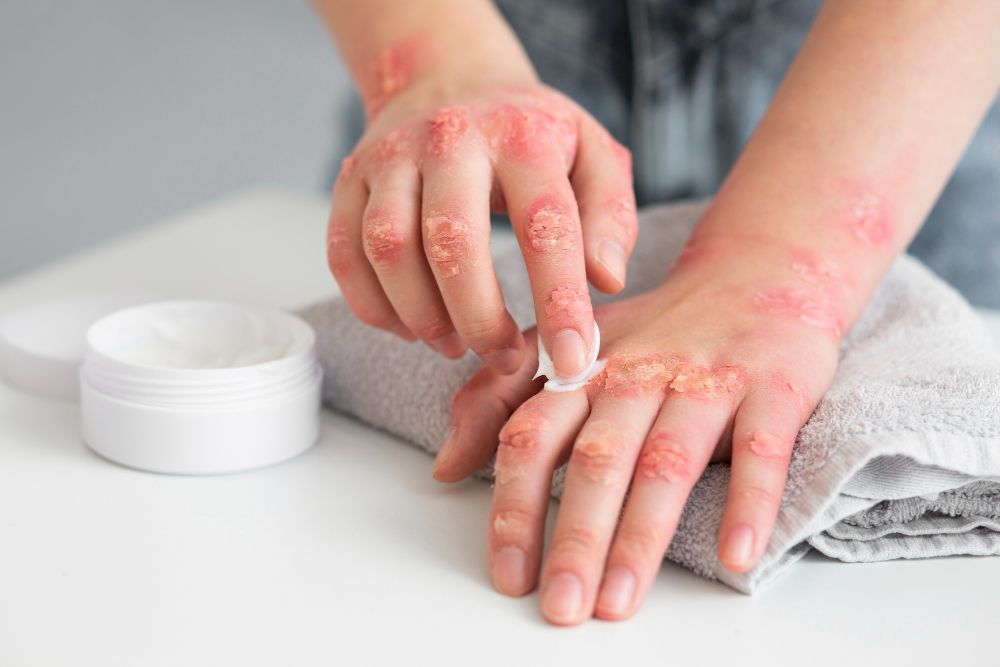
What is Contact Dermatitis?
Contact dermatitis is a common skin problem. It happens when your skin reacts to something it touches. Often, this reaction causes redness, itching, or swelling. Many people experience contact dermatitis from everyday products. For example, soaps, lotions, or cleaning supplies can trigger it. Because the skin acts as a barrier, it tries to protect you. However, some substances can break through and cause irritation. According to the CDC, contact dermatitis is not contagious. But it can be uncomfortable and may need care.
Common Symptoms of Contact Dermatitis
Symptoms of contact dermatitis can appear quickly or after a few days. Usually, the skin shows clear signs of irritation. For instance, you may notice:
Sometimes, the symptoms are mild. However, they can become severe if the skin is exposed again. If you notice these signs, you may have contact dermatitis.
Everyday Products That Can Cause Contact Dermatitis
Many items you use daily can cause skin irritation from everyday products. Even gentle products may trigger a reaction in some people. For example, common triggers include:
Because everyone’s skin is different, you may react to products that others do not. Always check labels for common irritants or allergens.
Causes and Risk Factors
Contact dermatitis has two main causes. First, irritant contact dermatitis happens when something damages your skin. Second, allergic contact dermatitis occurs when your immune system reacts to a substance. For example, harsh soaps can strip the skin’s oils and cause irritation. On the other hand, some people develop allergies to things like nickel or fragrances.
Several risk factors make contact dermatitis more likely. These include:
Because of these factors, some people are more at risk than others. However, anyone can develop contact dermatitis at any age.
How Contact Dermatitis is Diagnosed
Doctors diagnose contact dermatitis by looking at your skin and asking about your history. Often, they will ask when the rash started and what you touched before it appeared. Sometimes, doctors use patch testing. In this test, small amounts of possible triggers are placed on your skin. After a few days, they check for a reaction. According to the American Academy of Dermatology, patch testing helps find the cause of allergic contact dermatitis. Because diagnosis is important, always see a healthcare provider if you are unsure.
Effective Treatment Options
Treating contact dermatitis starts with avoiding the trigger. Once you know what caused the reaction, try not to touch it again. For mild cases, over-the-counter creams can help. For example, hydrocortisone cream can reduce itching and swelling. Additionally, cool compresses may soothe the skin. In some cases, doctors may prescribe stronger creams or pills. If blisters or severe swelling occur, seek medical advice. Because scratching can make things worse, try to keep nails short and avoid rubbing the area.
Prevention Tips and Lifestyle Guidance
Preventing contact dermatitis is possible with a few simple steps. First, try to identify and avoid known triggers. Next, use gentle, fragrance-free products whenever possible. When cleaning, wear gloves to protect your hands. After touching new items, wash your skin with mild soap and water. Moisturize often to keep your skin healthy. If you work with chemicals, follow safety instructions and use protective gear. Because prevention is key, these habits can lower your risk of skin irritation from everyday products.