Introduction
Many people search for safe ways to restore thinning hair. PRP hair regrowth is a natural option that uses your own blood to help hair grow back. PRP stands for Platelet-Rich Plasma. This treatment is gaining attention for its gentle, drug-free approach. Instead of using chemicals, PRP relies on your body’s healing power. In this blog, you will learn how PRP works, who can benefit, and what to expect from the process.
What is PRP?
PRP stands for Platelet-Rich Plasma. It is a part of your blood that is rich in platelets. Platelets help heal wounds and repair tissues. To get PRP, a doctor draws a small amount of your blood. Then, they spin it in a machine to separate the platelets. The result is a thick, yellow liquid full of growth factors. These growth factors help repair and grow new cells. Doctors use PRP in many fields, including sports medicine and skin care. Now, it is also used for natural hair regrowth with PRP.
How PRP Promotes Natural Hair Regrowth
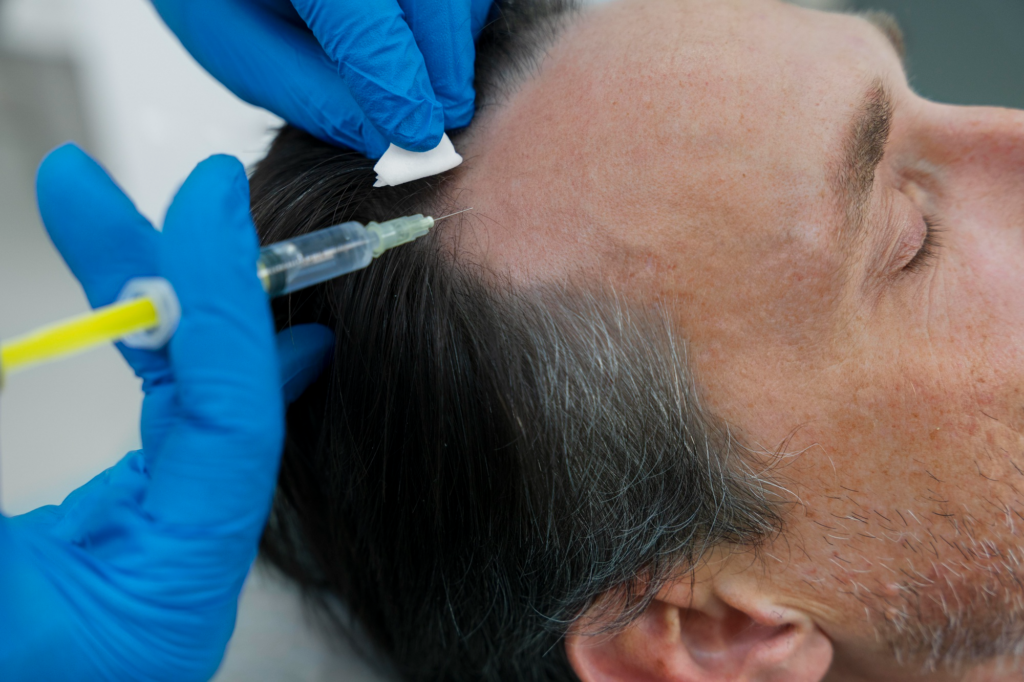
PRP treatment for hair loss works by boosting your scalp’s healing process. After the PRP is prepared, the doctor injects it into areas with thinning hair. The growth factors in PRP wake up hair roots. As a result, hair roots become stronger and healthier. Over time, this can lead to thicker and fuller hair. Because PRP uses your own blood, it is a natural way to help hair regrow. Many people choose PRP because it does not involve harsh chemicals or surgery.
Who Can Benefit from PRP Hair Regrowth?
Not everyone is the same, but many people can benefit from PRP hair regrowth. For example, PRP may help if you:
However, PRP may not work for everyone. People with complete baldness or certain medical conditions may not see results. Therefore, it is best to talk to a hair specialist before starting PRP treatment for hair loss.
The PRP Procedure: What to Expect
Knowing what happens during PRP treatment can help you feel at ease. Here is a step-by-step guide:
The whole process usually takes about one hour. For best results, you may need several sessions, spaced a few weeks apart.
Effectiveness and Results: What Does the Research Say?
Many studies support the use of PRP for hair regrowth. For instance, research in medical journals shows that PRP can increase hair thickness and count. According to the American Academy of Dermatology, PRP is a promising treatment for some types of hair loss. However, results can vary from person to person. Some people see new hair growth within three to six months. Others may need more time or extra sessions. While PRP is not a cure for all hair loss, it offers hope for many seeking natural hair regrowth with PRP.
Safety, Side Effects, and Recovery
Many people ask, “Is PRP safe for hair regrowth?” The answer is yes for most healthy adults. Because PRP uses your own blood, the risk of allergic reaction is very low. However, as with any treatment, there can be mild side effects. These may include:
Usually, these side effects go away within a few days. Most people return to work or daily life right after the procedure. Still, always follow your doctor’s advice for the best recovery.
Tips for Maximizing PRP Results Naturally
To get the most from PRP hair regrowth, follow these tips:
Additionally, gentle scalp massages may help improve blood flow. Over time, these habits can support healthy hair growth.
Frequently Asked Questions about PRP Hair Regrowth
Conclusion
In summary, PRP hair regrowth offers a natural, safe way to restore thinning hair. It uses your own blood to boost hair health and growth. While results can vary, many people see fuller hair after a few sessions. If you are interested in natural hair regrowth with PRP, consult a dermatologist or hair specialist for personalized advice on PRP hair regrowth.