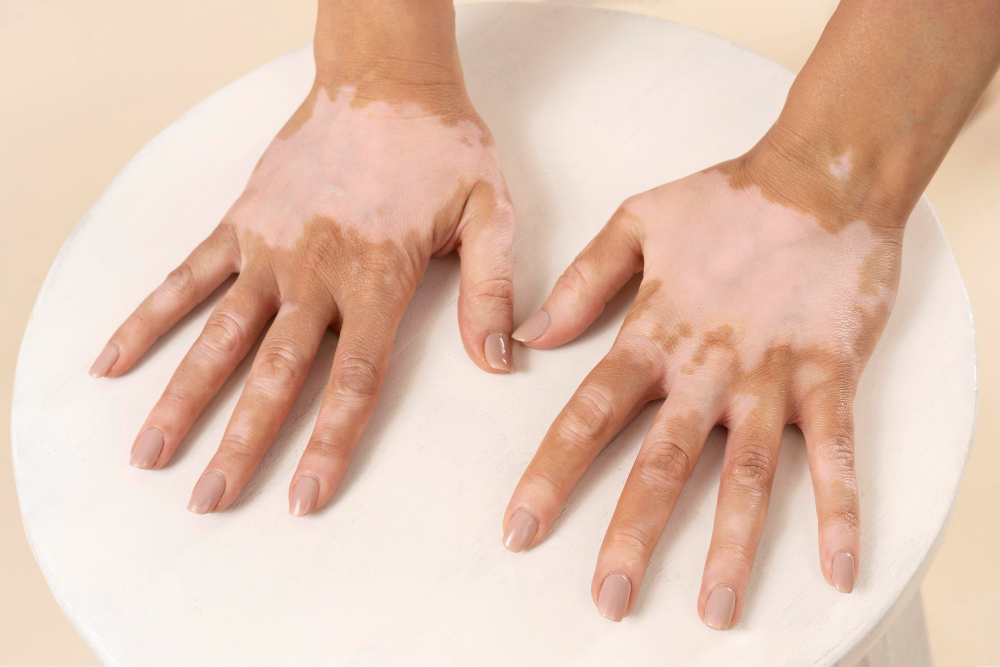
What is Vitiligo?
Vitiligo is a skin condition that causes patches of skin to lose their color. These patches can appear anywhere on the body. Often, the change is more noticeable on people with darker skin. Because vitiligo affects how skin looks, it can also impact self-esteem. However, it is not contagious or dangerous. According to the World Health Organization (WHO), vitiligo affects about 1% of the world’s population. Since many people want to know about vitiligo symptoms and treatment options, understanding this condition is important.
Common Symptoms of Vitiligo
Vitiligo symptoms often start with small, pale spots on the skin. Over time, these spots may grow or join together. In many cases, the patches are lighter than the surrounding skin. But, the condition can look different for each person. Here are some common signs:
Sometimes, people notice itching before a new patch appears. Yet, most people do not feel any pain or discomfort.
Causes and Risk Factors
Doctors are still learning about the exact causes of vitiligo. However, most experts agree that it happens when the body’s immune system attacks the cells that make skin color. These cells are called melanocytes. As a result, the skin loses its color in certain areas. Several factors may increase the risk of developing vitiligo:
Even though these factors may play a role, anyone can develop vitiligo. Sometimes, there is no clear reason why it starts.
How is Vitiligo Diagnosed?
Many people wonder, “How is vitiligo diagnosed?” Usually, a dermatologist can diagnose vitiligo by looking at the skin. Still, other tests may help confirm the diagnosis. For example, a doctor may use a special lamp called a Wood’s lamp to see the patches more clearly. In some cases, a small skin sample (biopsy) is taken. Blood tests may also be done to check for other autoimmune diseases. Early diagnosis helps start treatment sooner, which can improve results.
Treatment Options for Vitiligo
There are several vitiligo treatment options available. Although there is no cure, treatments can help restore color or slow the spread of patches. The best choice depends on the size, location, and number of patches. Here are some common treatments:
Because each person is different, a dermatologist can help choose the right treatment plan. According to the American Academy of Dermatology, early treatment often works best.
Lifestyle Tips and Prevention
While there is no sure way to prevent vitiligo, some steps may help manage the condition. For instance, protecting your skin from the sun is important. Sunburn can make patches more noticeable. Here are some helpful tips:
Although these steps cannot cure vitiligo, they can help keep your skin healthy and reduce the risk of new patches.
When to See a Dermatologist
If you notice new white patches or changes in your skin, it is a good idea to see a dermatologist. Early care can help manage vitiligo symptoms and prevent further spread. In addition, a doctor can rule out other skin conditions. If you feel worried or upset about your skin, talking to a professional can also help.
Frequently Asked Questions (FAQs)
Conclusion and Call-to-Action
In summary, vitiligo is a common skin condition that causes loss of color in patches. While it is not harmful, it can affect how you feel about your appearance. Thankfully, many treatment options and lifestyle tips can help manage vitiligo symptoms. If you notice changes in your skin, consult a dermatologist for personalized advice on vitiligo management.